
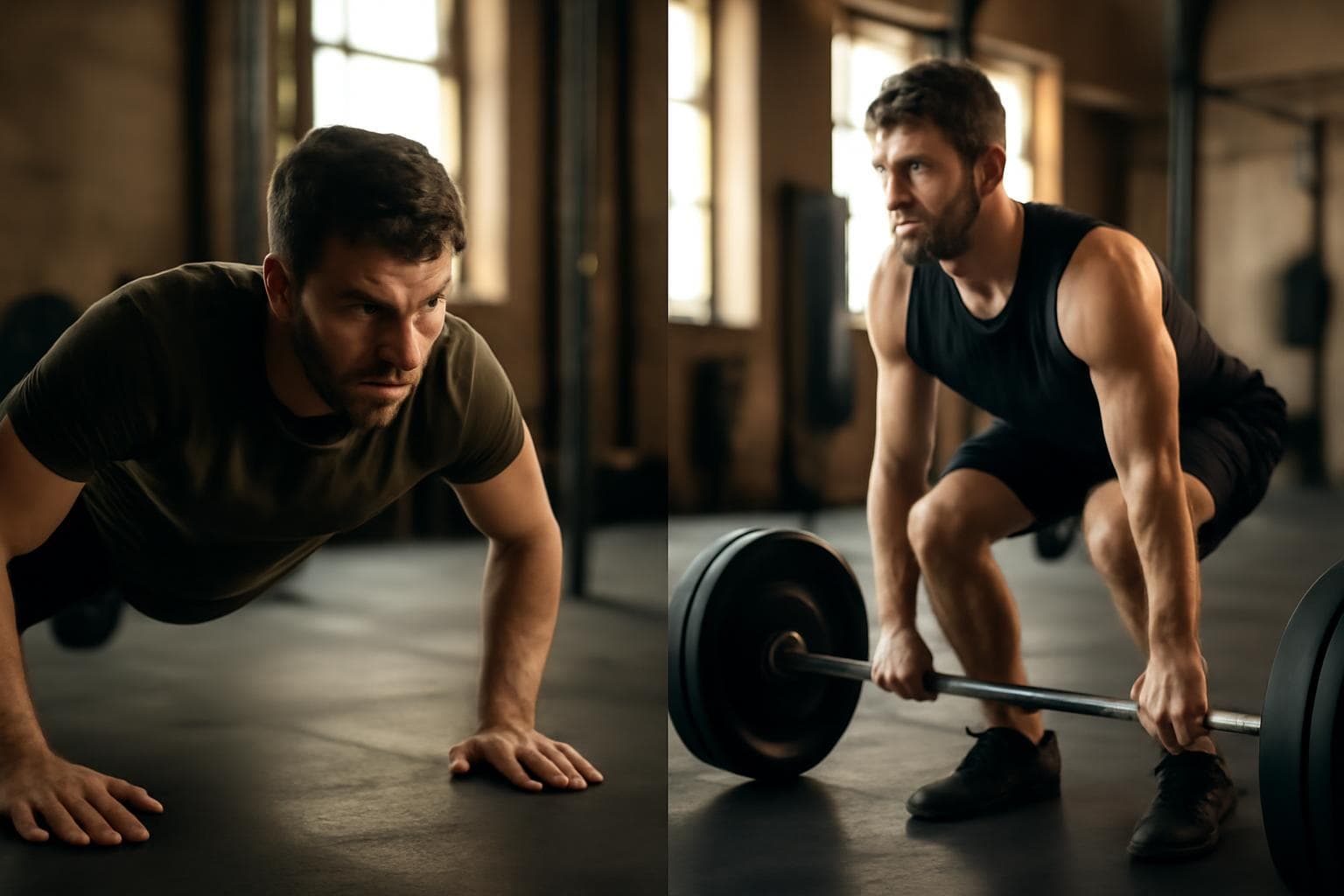
Calisthenics and weightlifting are both effective strength training methods, each offering unique benefits. Choosing between them depends on your specific fitness goals, preferences, and circumstances.
What Is Calisthenics?
Calisthenics involves exercises that use your body weight as resistance, such as push-ups, pull-ups, squats, and lunges. These movements can be performed anywhere with minimal to no equipment, making them highly accessible. Calisthenics focuses on functional movements that engage multiple muscle groups simultaneously, enhancing coordination, flexibility, and balance. ([healthline.com](https://www.healthline.com/health/calisthenics-vs-weightlifting?utm_source=openai))
What Is Weightlifting?
Weightlifting, or resistance training, involves using external weights like dumbbells, barbells, or machines to create resistance against your muscles. This method allows for precise targeting of specific muscle groups and straightforward progression by adjusting the weight lifted. Weightlifting is typically performed in a gym setting due to the equipment required. ([healthline.com](https://www.healthline.com/health/calisthenics-vs-weightlifting?utm_source=openai))
Comparing Strength and Muscle Development
Both calisthenics and weightlifting can build strength and muscle mass, but they do so differently:
- Calisthenics: Emphasizes relative strength (strength relative to body weight) and functional movements. Progression is achieved by modifying exercises to increase difficulty, such as transitioning from standard push-ups to one-arm push-ups. ([onlinecalisthenics.com](https://www.onlinecalisthenics.com/blog/Calisthenics%20vs-%20Weightlifting%3A%20Which%20Is%20Best%20for%20Your%20Fitness%20Goal?utm_source=openai))
- Weightlifting: Focuses on absolute strength and muscle hypertrophy (growth). Progression is more straightforward by incrementally increasing the weight lifted, allowing for targeted muscle development. ([healthline.com](https://www.healthline.com/health/calisthenics-vs-weightlifting?utm_source=openai))
Calorie Burn and Fat Loss
Calisthenics often involves compound movements that engage multiple muscle groups, leading to higher calorie expenditure during workouts. This can be advantageous for fat loss and improving cardiovascular fitness. ([healthline.com](https://www.healthline.com/health/calisthenics-vs-weightlifting?utm_source=openai))
Weightlifting, while primarily focused on building muscle, also contributes to fat loss. Increased muscle mass elevates the basal metabolic rate, meaning you burn more calories at rest. However, the calorie burn during a weightlifting session may be lower compared to a high-intensity calisthenics workout. ([healthline.com](https://www.healthline.com/health/calisthenics-vs-weightlifting?utm_source=openai))
Flexibility, Balance, and Functional Fitness
Calisthenics exercises often mimic natural movement patterns, enhancing flexibility, balance, and overall functional fitness. This can translate to improved performance in daily activities and sports. ([healthline.com](https://www.healthline.com/health/calisthenics-vs-weightlifting?utm_source=openai))
Weightlifting can also improve functional strength, especially when incorporating compound movements like squats and deadlifts. However, it may require additional flexibility and balance training to achieve similar benefits. ([healthline.com](https://www.healthline.com/health/calisthenics-vs-weightlifting?utm_source=openai))
Accessibility and Convenience
Calisthenics requires minimal to no equipment, making it accessible and convenient for individuals who prefer to exercise at home or in outdoor settings. This can be particularly beneficial for those with limited access to gym facilities. ([healthline.com](https://www.healthline.com/health/calisthenics-vs-weightlifting?utm_source=openai))
Weightlifting typically requires access to a gym or home equipment, which may involve additional costs and space considerations. However, it offers the advantage of precise load adjustments and a wide variety of exercises targeting specific muscle groups. ([healthline.com](https://www.healthline.com/health/calisthenics-vs-weightlifting?utm_source=openai))
Combining Calisthenics and Weightlifting
Integrating both calisthenics and weightlifting into your fitness routine can provide a comprehensive approach to strength training. For example, you might perform calisthenics exercises to improve functional strength and flexibility, while incorporating weightlifting to target specific muscle groups and enhance absolute strength. This combination can help you achieve a balanced and versatile fitness profile. ([healthline.com](https://www.healthline.com/health/calisthenics-vs-weightlifting?utm_source=openai))
Conclusion
Both calisthenics and weightlifting offer valuable benefits for strength training. Your choice should align with your personal fitness goals, preferences, and lifestyle. Consider factors such as accessibility, desired outcomes, and enjoyment to determine the best approach for you. Remember, the most effective workout is one that you can consistently perform and enjoy.
References
- Calisthenics vs. Weightlifting: Which One Is Best for You?
- Calisthenics vs. Weightlifting: Which is Better for Building Strength?
- Calisthenics vs. Weightlifting: Which Is Better for Beginners?
- Calisthenics vs. Weightlifting: What's the Difference?
- Calisthenics vs. Weightlifting: Which Is Best for Your Fitness Goal?
For personalized guidance on incorporating calisthenics, weightlifting, or a combination of both into your fitness routine, consider consulting with a qualified personal trainer. Explore our network of vetted trainers to find the right fit for your goals and preferences.