
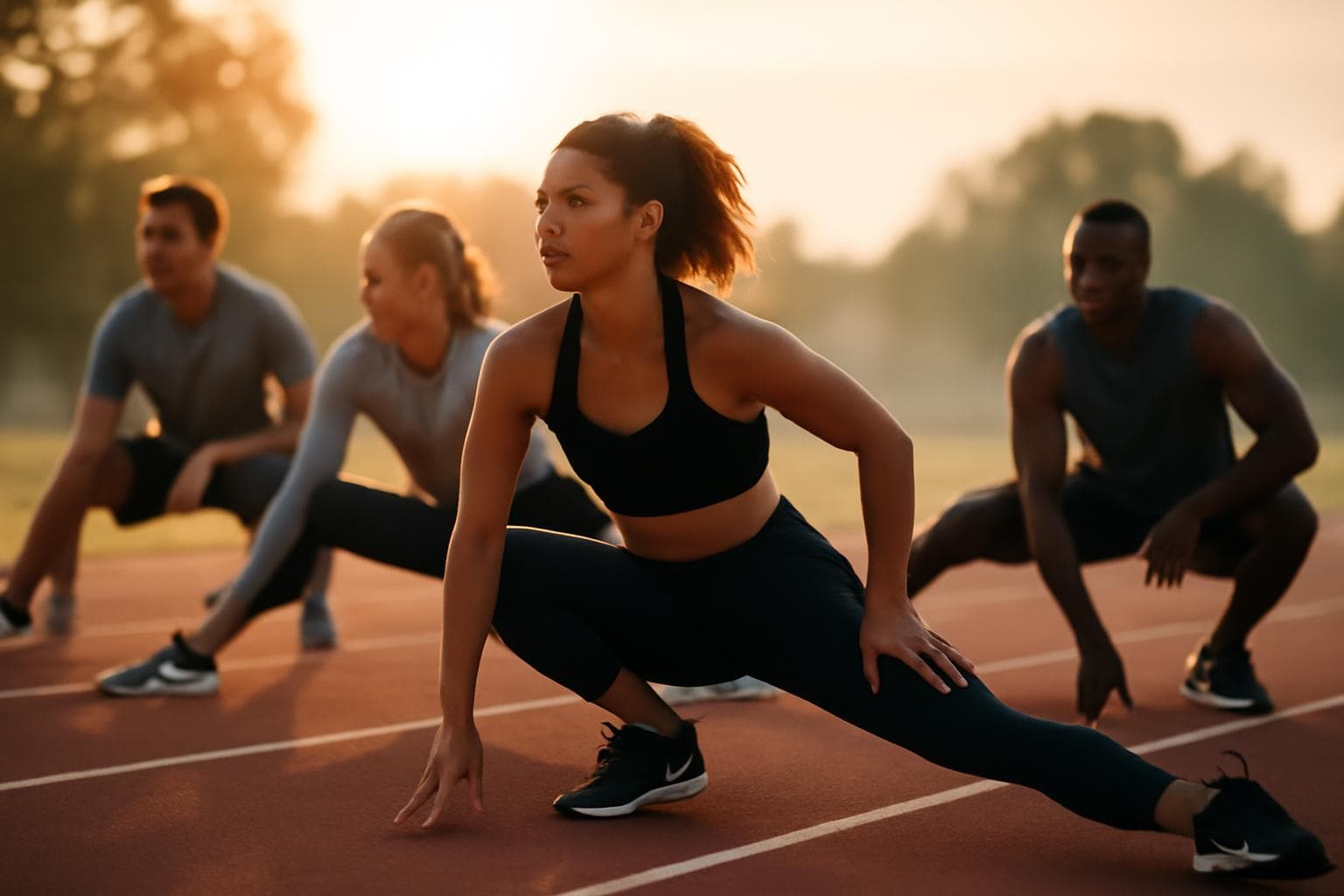
Incorporating both dynamic and static stretching exercises into an athlete's routine can significantly enhance performance and reduce the risk of injuries. Dynamic stretches, performed before activities, prepare the muscles and joints for movement, while static stretches, done post-activity, aid in muscle recovery and maintain flexibility.
Why Is Flexibility Important for Athletes?
Flexibility refers to the ability of muscles and joints to move through their full range of motion. For athletes, maintaining optimal flexibility is crucial for several reasons:
- Enhanced Performance: Improved flexibility allows for more efficient movement patterns, leading to better technique and performance.
- Injury Prevention: Flexible muscles and tendons are less prone to strains and tears. Regular stretching can help reduce muscle stiffness, which is a common cause of injuries. ([health.harvard.edu](https://www.health.harvard.edu/healthy-aging-and-longevity/take-time-to-stretch?utm_source=openai))
- Increased Range of Motion: Greater flexibility enables athletes to perform movements with a wider range, which is beneficial in sports requiring extensive limb motion.
Dynamic Stretching: Preparing the Body for Activity
Dynamic stretching involves moving parts of your body through a full range of motion in a controlled manner. These stretches are particularly effective as part of a warm-up routine. They increase blood flow, elevate muscle temperature, and enhance nerve activity, all of which prepare the body for physical activity. ([health.harvard.edu](https://www.health.harvard.edu/exercise-and-fitness/take-time-to-stretch-FV8ERJTB?utm_source=openai))
Recommended Dynamic Stretches for Athletes
- Leg Swings: Stand upright and swing one leg forward and backward, gradually increasing the range of motion. Perform 10-15 swings per leg.
- Arm Circles: Extend your arms out to the sides and make small circles, gradually increasing to larger circles. Do this for 30 seconds in each direction.
- Torso Twists: Stand with feet shoulder-width apart and rotate your torso from side to side, allowing your arms to swing freely. Repeat for 20 twists.
- High Knees: March in place, bringing your knees up to hip level. Continue for 30 seconds.
Static Stretching: Aiding Recovery and Maintaining Flexibility
Static stretching involves holding a stretch position for a period, typically 15-60 seconds. These stretches are most effective when performed after physical activity, as they help relax the muscles, improve flexibility, and reduce muscle soreness. ([health.harvard.edu](https://www.health.harvard.edu/exercise-and-fitness/take-time-to-stretch-FV8ERJTB?utm_source=openai))
Recommended Static Stretches for Athletes
- Hamstring Stretch: Sit on the ground with one leg extended and the other bent. Reach toward the toes of the extended leg, keeping your back straight. Hold for 30 seconds and switch legs.
- Quadriceps Stretch: Stand upright, pull one foot toward your buttocks, holding the ankle with your hand. Keep your knees together and hold for 30 seconds per leg.
- Shoulder Stretch: Bring one arm across your body and use the opposite hand to press the arm toward your chest. Hold for 30 seconds and switch arms.
- Calf Stretch: Place your hands against a wall, step one foot back, and press the heel into the ground. Keep the back leg straight and hold for 30 seconds per leg.
Integrating Flexibility Training into Your Routine
To reap the benefits of flexibility training, athletes should incorporate both dynamic and static stretches into their regular routines. The American College of Sports Medicine recommends stretching exercises at least two days per week, targeting all major muscle groups. ([va.gov](https://www.va.gov/WHOLEHEALTHLIBRARY/tools/improving-flexibility.asp?utm_source=openai))
Tips for Effective Stretching
- Warm-Up First: Always perform a general warm-up, such as light jogging, before stretching to increase muscle temperature.
- Focus on Major Muscle Groups: Ensure you stretch all major muscle groups, especially those heavily used in your sport.
- Hold, Don't Bounce: When performing static stretches, hold the position without bouncing to avoid muscle strain.
- Listen to Your Body: Stretch to the point of mild discomfort, not pain. Overstretching can lead to injuries.
Additional Flexibility Enhancing Activities
Beyond traditional stretching, activities such as yoga and Pilates can significantly improve flexibility. These practices combine stretching with strength and balance exercises, offering comprehensive benefits for athletes. ([va.gov](https://www.va.gov/WHOLEHEALTHLIBRARY/tools/improving-flexibility.asp?utm_source=openai))
Conclusion
Incorporating regular flexibility exercises into an athlete's training regimen is essential for optimal performance and injury prevention. By combining dynamic stretches before activities and static stretches afterward, athletes can maintain and enhance their range of motion, leading to improved athletic outcomes.
For more personalized guidance on flexibility training, consider consulting with a certified personal trainer who can tailor a program to your specific needs. Explore our network of experienced trainers at Fitsylvania.