
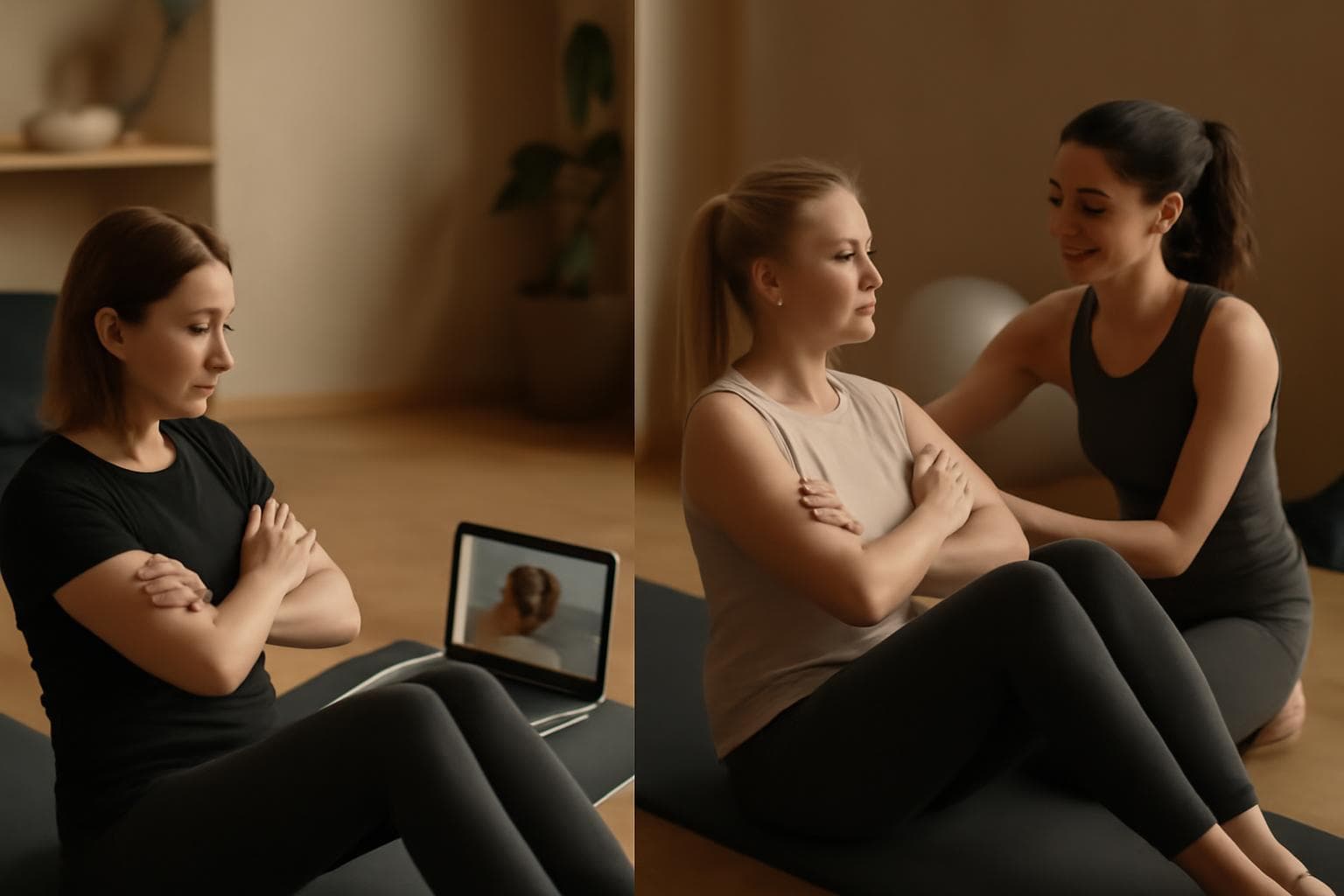
Choosing between online and in-person personal training depends on your individual goals, lifestyle, and preferences. Both options offer unique benefits and potential drawbacks. Understanding these can help you make an informed decision that aligns with your fitness journey.
Online Personal Training
Online personal training has gained significant popularity, offering flexibility and accessibility to clients worldwide.
Advantages
- Flexibility and Convenience: Train at any time and place that suits you, accommodating busy schedules and personal commitments. This is particularly beneficial for those who travel frequently or prefer exercising at home. Source
- Cost-Effectiveness: Generally, online training is more affordable than in-person sessions. Monthly subscriptions often range from $100 to $300, compared to $60–$120 per in-person session. Source
- Personalised Programming: Trainers can tailor workouts and nutrition plans to your specific goals, equipment availability, and progress, often with regular check-ins and adjustments. Source
Disadvantages
- Self-Motivation Required: Without a trainer physically present, maintaining discipline and motivation can be challenging.
- Limited Real-Time Feedback: While some platforms offer video submissions for form checks, the absence of immediate, hands-on correction may affect exercise execution and safety.
- Potential for Miscommunication: Relying on digital communication can sometimes lead to misunderstandings or delays in feedback.
In-Person Personal Training
Traditional face-to-face training provides direct interaction and immediate feedback.
Advantages
- Immediate Feedback and Form Correction: Trainers can observe and correct your form in real-time, reducing the risk of injury and ensuring effective workouts. Source
- Accountability and Motivation: Scheduled sessions and the physical presence of a trainer can enhance commitment and drive. Source
- Access to Equipment: Training in a gym provides a variety of equipment that may not be available at home, allowing for a more diverse workout regimen. Source
Disadvantages
- Higher Cost: In-person sessions are typically more expensive, with costs accumulating over time.
- Scheduling Constraints: Coordinating schedules with a trainer and commuting to a gym can be time-consuming and less flexible.
- Geographical Limitations: Your choice of trainers is restricted to those available in your local area.
Comparative Overview
| Aspect | Online Personal Training | In-Person Personal Training |
|---|---|---|
| Flexibility | High; train anytime, anywhere | Lower; fixed schedules and locations |
| Cost | Generally more affordable | Typically more expensive |
| Feedback | Delayed; relies on video submissions | Immediate; real-time corrections |
| Motivation | Self-driven | Trainer-driven |
| Equipment Access | Limited to personal equipment | Full access to gym facilities |
Making the Right Choice
Consider the following factors when deciding between online and in-person personal training:
- Experience Level: Beginners may benefit more from in-person training to learn proper form and technique, while experienced individuals might find online training sufficient.
- Learning Style: If you prefer direct, hands-on instruction, in-person training may be more effective. Conversely, if you're comfortable with self-guided learning and digital communication, online training could be suitable.
- Budget: Assess your financial capacity to determine which option is more feasible in the long term.
- Schedule and Lifestyle: Evaluate your daily routine and commitments to choose a training format that fits seamlessly into your life.
Hybrid Approach
Combining both online and in-person training can offer a balanced approach. For instance, starting with in-person sessions to establish a solid foundation, then transitioning to online training for ongoing support and flexibility. This hybrid model can provide the benefits of both formats, tailored to your evolving needs.
Ultimately, the best choice depends on your personal circumstances, goals, and preferences. Reflecting on these aspects will guide you toward the most effective and enjoyable path in your fitness journey.
At Fitsylvania, we offer a range of options to suit your needs, whether you're looking for in-person guidance or the flexibility of online coaching. Explore our vetted personal trainers and fitness courses to find the perfect fit for your goals.