
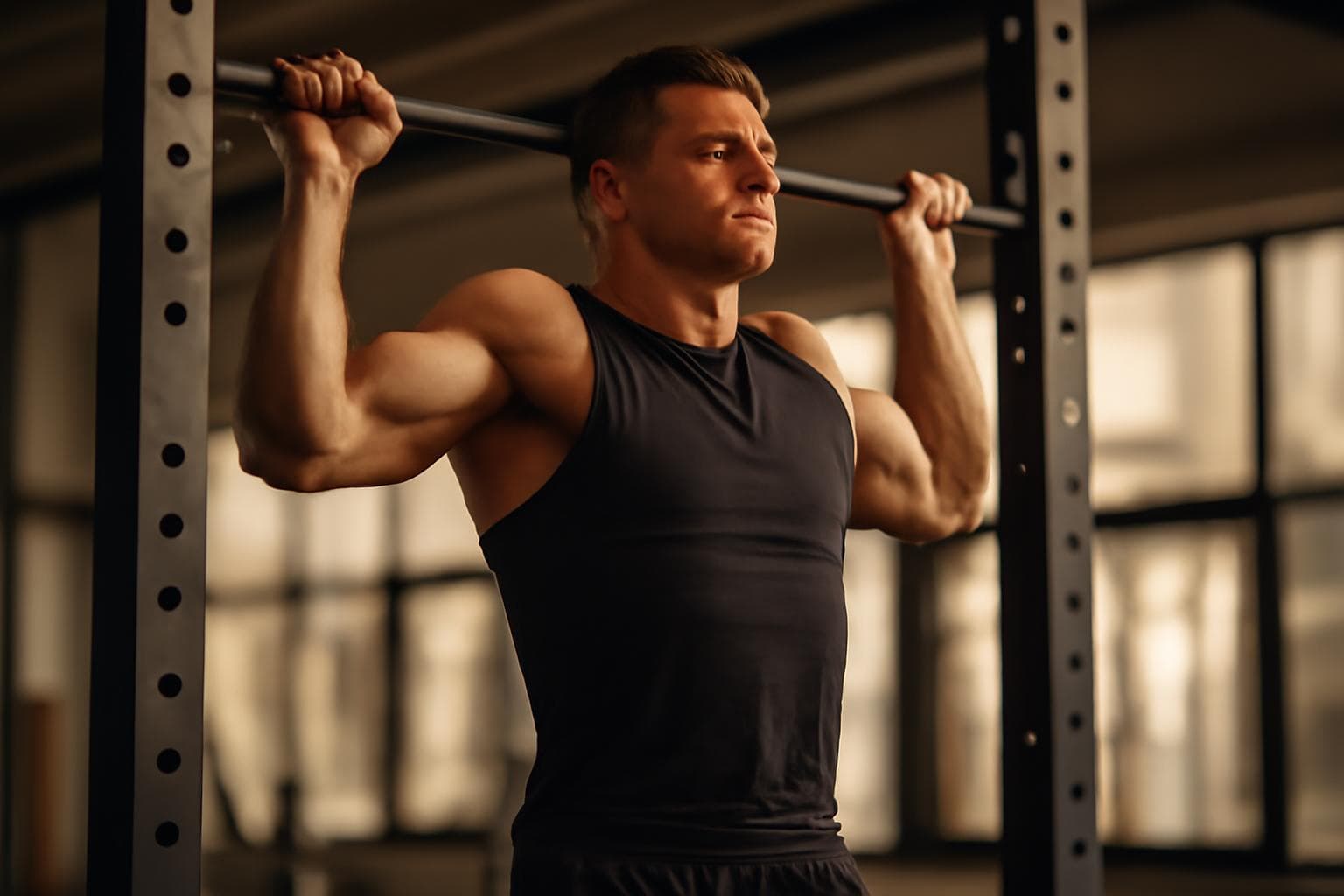
Achieving your first pull-up is a significant milestone in fitness, requiring a combination of upper body strength, proper technique, and consistent practice. This guide outlines a structured progression to help you build the necessary strength and skills to perform your first pull-up.
Understanding the Pull-Up
A pull-up is an upper-body exercise where you lift your body by pulling up from a dead hang position until your chin is above the bar. It primarily targets the latissimus dorsi, biceps, and trapezius muscles, while also engaging the core and forearms.
Step-by-Step Progression to Your First Pull-Up
1. Dead Hangs
Begin by developing grip strength and shoulder stability through dead hangs:
- How to Perform: Hang from a pull-up bar with arms fully extended and shoulders engaged (avoid shrugging). Hold this position.
- Goal: Aim to hold for 30 seconds, gradually increasing to 60 seconds over time.
Dead hangs build the foundational grip and shoulder endurance necessary for pull-ups. ([odin.fitness](https://www.odin.fitness/blog/complete-guide-calisthenics-first-pull-up?utm_source=openai))
2. Scapular Pull-Ups
Next, focus on activating the muscles responsible for the initial phase of the pull-up:
- How to Perform: From a dead hang, pull your shoulder blades down and together without bending your elbows. Your body will rise slightly.
- Goal: Perform 3 sets of 10-12 repetitions.
This exercise enhances scapular control and prepares your back muscles for the pulling motion. ([odin.fitness](https://www.odin.fitness/blog/complete-guide-calisthenics-first-pull-up?utm_source=openai))
3. Inverted Rows
Inverted rows strengthen the same muscles used in pull-ups but in a horizontal plane:
- How to Perform: Set a bar at waist height. Lie underneath it, grab the bar with an overhand grip, and pull your chest towards the bar while keeping your body straight.
- Goal: Aim for 3 sets of 15 repetitions.
Adjust the difficulty by changing the angle of your body; the more horizontal, the more challenging. ([odin.fitness](https://www.odin.fitness/blog/complete-guide-calisthenics-first-pull-up?utm_source=openai))
4. Negative Pull-Ups
Negative pull-ups focus on the eccentric phase, building strength through controlled lowering:
- How to Perform: Use a step or jump to get your chin above the bar. Slowly lower yourself to a dead hang over 5-10 seconds.
- Goal: Complete 3 sets of 3-5 repetitions.
Emphasizing the lowering phase helps develop the strength needed for the upward pull. ([odin.fitness](https://www.odin.fitness/blog/complete-guide-calisthenics-first-pull-up?utm_source=openai))
5. Band-Assisted Pull-Ups
Resistance bands can provide assistance as you practice the full pull-up motion:
- How to Perform: Loop a resistance band over the bar and place one foot or knee in it. Perform pull-ups as usual, with the band reducing the load.
- Goal: Perform 3 sets of 8-10 repetitions, gradually using lighter bands as you progress.
This method allows you to experience the full range of motion while building strength. ([odin.fitness](https://www.odin.fitness/blog/complete-guide-calisthenics-first-pull-up?utm_source=openai))
6. Full Pull-Ups
Once you've built sufficient strength, attempt unassisted pull-ups:
- How to Perform: From a dead hang, engage your lats and pull your chin above the bar, then lower yourself back down with control.
- Goal: Start with 1-2 repetitions, gradually increasing as you build strength.
Focus on maintaining proper form to maximize effectiveness and prevent injury. ([odin.fitness](https://www.odin.fitness/blog/complete-guide-calisthenics-first-pull-up?utm_source=openai))
Additional Tips for Success
- Consistency: Practice these exercises 2-3 times per week, allowing for rest days to facilitate muscle recovery.
- Progressive Overload: Gradually increase the difficulty by adding more repetitions, sets, or reducing assistance.
- Complementary Exercises: Incorporate exercises like lat pulldowns, bicep curls, and core workouts to strengthen supporting muscles.
- Rest and Recovery: Ensure adequate rest between workouts to allow muscles to recover and grow.
Remember, achieving your first pull-up is a journey that requires patience and dedication. Celebrate small milestones along the way to stay motivated.
References
- How to Get Your First Pull-Up: Complete Beginner's Guide (8-Week Plan)
- How To Do Pull Ups – A Beginners Workout
- First Strict Pull-Up: Progression Program
For personalized guidance and support on your fitness journey, consider connecting with a qualified personal trainer. Explore our range of experienced trainers at Fitsylvania to find the right fit for your goals.