
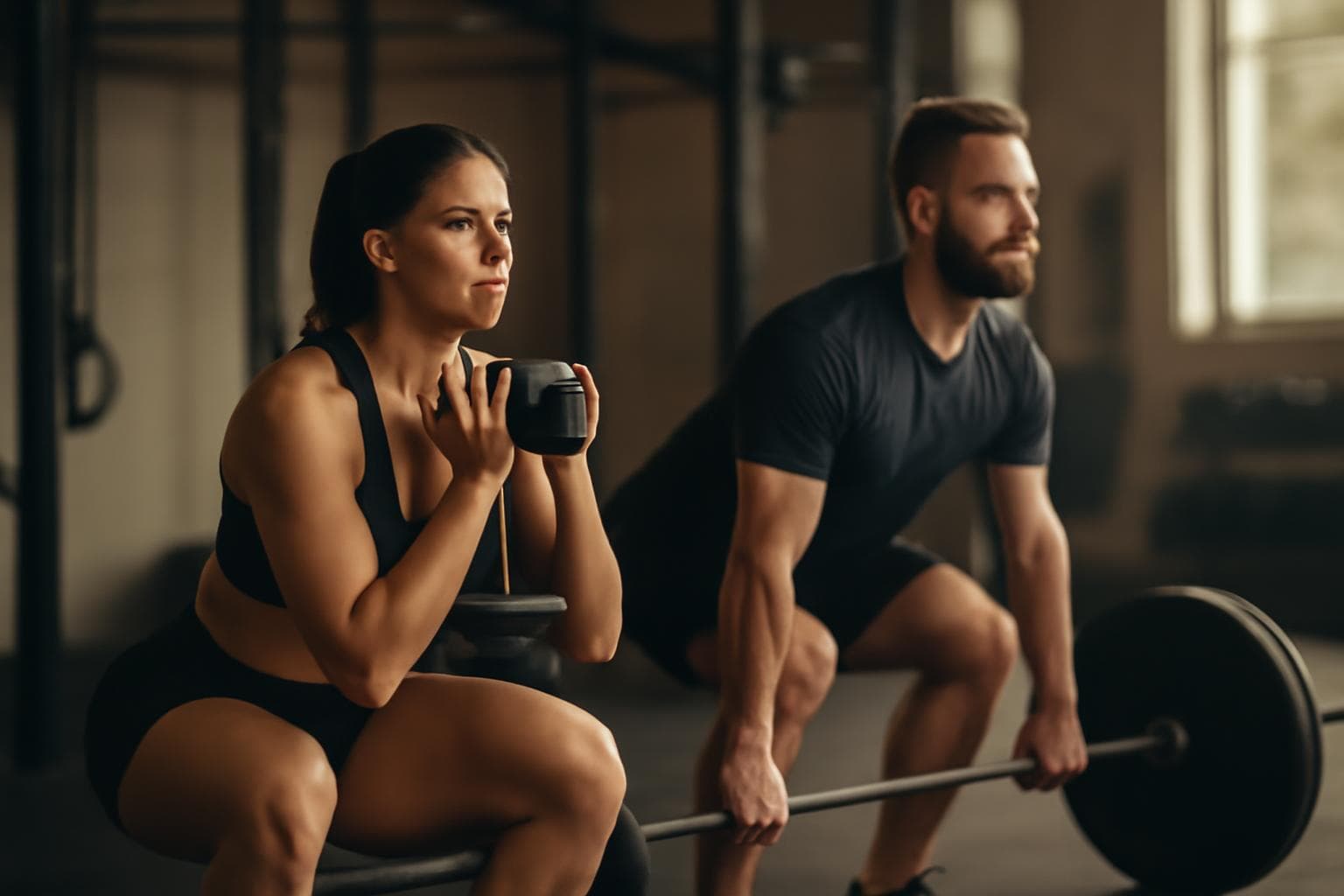
Yes, on average, men are stronger than women due to differences in muscle mass, hormone levels, and muscle fiber composition. However, when strength is measured relative to muscle size, the differences diminish, indicating that muscle quality is similar between sexes. Both men and women can achieve significant strength gains through appropriate training.
What Factors Contribute to Strength Differences Between Men and Women?
Several physiological and hormonal factors contribute to the observed strength differences between men and women:
- Muscle Mass: Men typically have greater muscle mass than women, contributing to higher absolute strength levels. This difference is more pronounced in the upper body, where women’s strength is approximately 50–60% of men’s, compared to 60–70% in the lower body. [Source]
- Hormonal Differences: Testosterone plays a significant role in muscle development. Men produce significantly more testosterone than women, leading to greater muscle hypertrophy and strength. [Source]
- Muscle Fiber Composition: Men tend to have larger type II (fast-twitch) muscle fibers, which are crucial for generating force and power. Women, however, often have a higher proportion of type I (slow-twitch) fibers, contributing to greater endurance. [Source]
Can Women Achieve Similar Strength Gains as Men Through Training?
Despite these differences, research indicates that women can achieve strength gains comparable to men when following similar resistance training programs. A study published in the Journal of Strength and Conditioning Research found that both sexes experience similar relative increases in muscle size and strength with consistent training. [Source]
It's important to note that while the absolute strength levels may differ due to initial muscle mass and hormonal differences, the relative improvements from baseline are similar. This means that women can effectively increase their strength and muscle mass through proper training.
How Should Women Approach Strength Training?
Women should approach strength training with the same principles as men, focusing on progressive overload, adequate recovery, and consistency. Key considerations include:
- Lift Heavier Weights: To build strength, it's essential to lift weights that are challenging enough to fatigue the muscles within 6–8 repetitions. This approach stimulates muscle growth and strength development. [Source]
- Incorporate Compound Movements: Exercises like squats, deadlifts, and bench presses engage multiple muscle groups, leading to more significant strength gains.
- Ensure Proper Nutrition: Adequate protein intake supports muscle repair and growth. For more information on optimal protein sources, refer to our article on Optimal Protein Sources for Muscle Gain.
- Allow for Recovery: Rest days are crucial for muscle recovery and growth. Overtraining can hinder progress and increase the risk of injury. Learn more about the importance of rest days in our article on The Crucial Role of Rest Days in Your Fitness Routine.
Are There Any Misconceptions About Women and Strength Training?
Yes, several misconceptions persist:
- Bulking Up: Many women fear that lifting heavy weights will make them bulky. However, due to lower testosterone levels, women are less likely to develop large muscle mass compared to men. Strength training leads to a toned and defined physique rather than bulkiness. [Source]
- Training Differently: Some believe that women need to follow different training programs than men. In reality, the fundamental principles of strength training apply to both sexes, and women can follow similar programs to achieve their goals. [Source]
Conclusion
While men and women have inherent physiological differences that affect absolute strength levels, both sexes have the capacity to achieve significant strength gains through proper training. Understanding these differences and focusing on effective training strategies can empower women to reach their strength and fitness goals.
For personalized guidance and support in your strength training journey, consider connecting with a qualified personal trainer. Explore our range of experienced trainers at Fitsylvania to find the right fit for your needs.